
Roadside Junction Box Monitoring
See enclosure access and vibration events. Review the device readings and confirm what happened with the field team.
Discuss your requirementLive field demonstration
Operational challenge
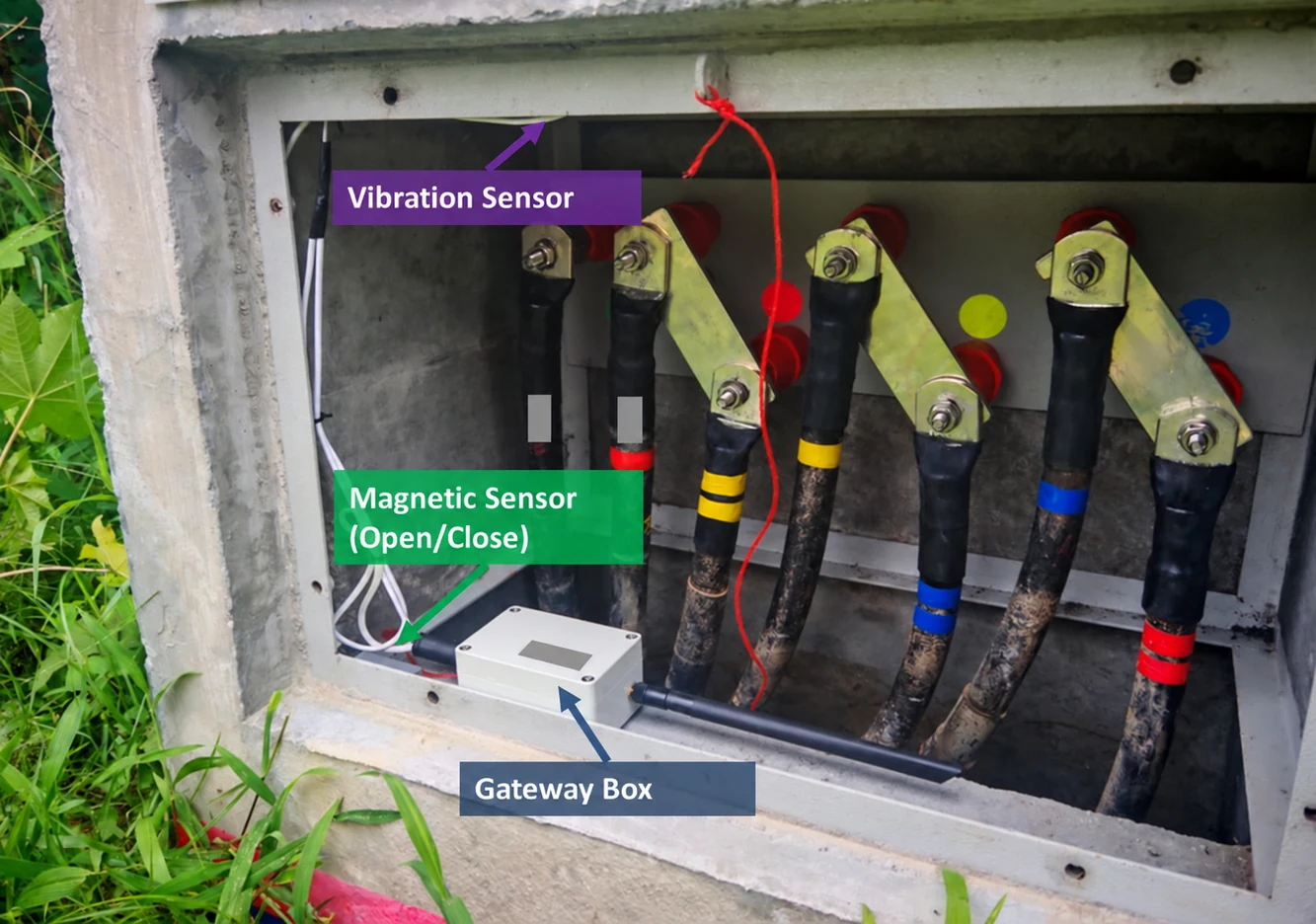
Weather, maintenance and unexpected access can all disturb roadside enclosures. Operators need event records and reliable closed-box communication.
What we monitor
Open / close state
Access condition of the door or cover.
Vibration and impact
Physical disturbance exceeding configured sensitivity.
Battery condition
Voltage trends and the configured low-level reference.
Communication health
Signal readings and status reporting.
Event history
Timestamped records for review with the field team.
How the system works
Field sensing
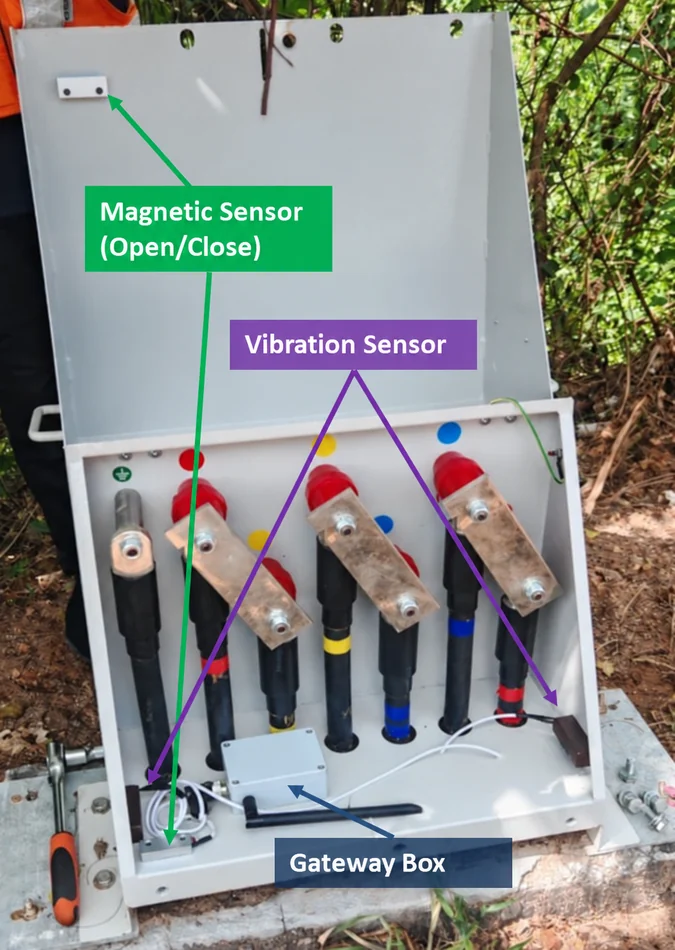
Sense access and enclosure vibration.
Wireless reporting
Transmit readings from the battery-powered gateway.
Monitoring platform
Review status, voltage, signal and history.
Alert & response
Send configured mobile alerts.
Operational verification
Confirm activity and refine sensitivity.
Field validation
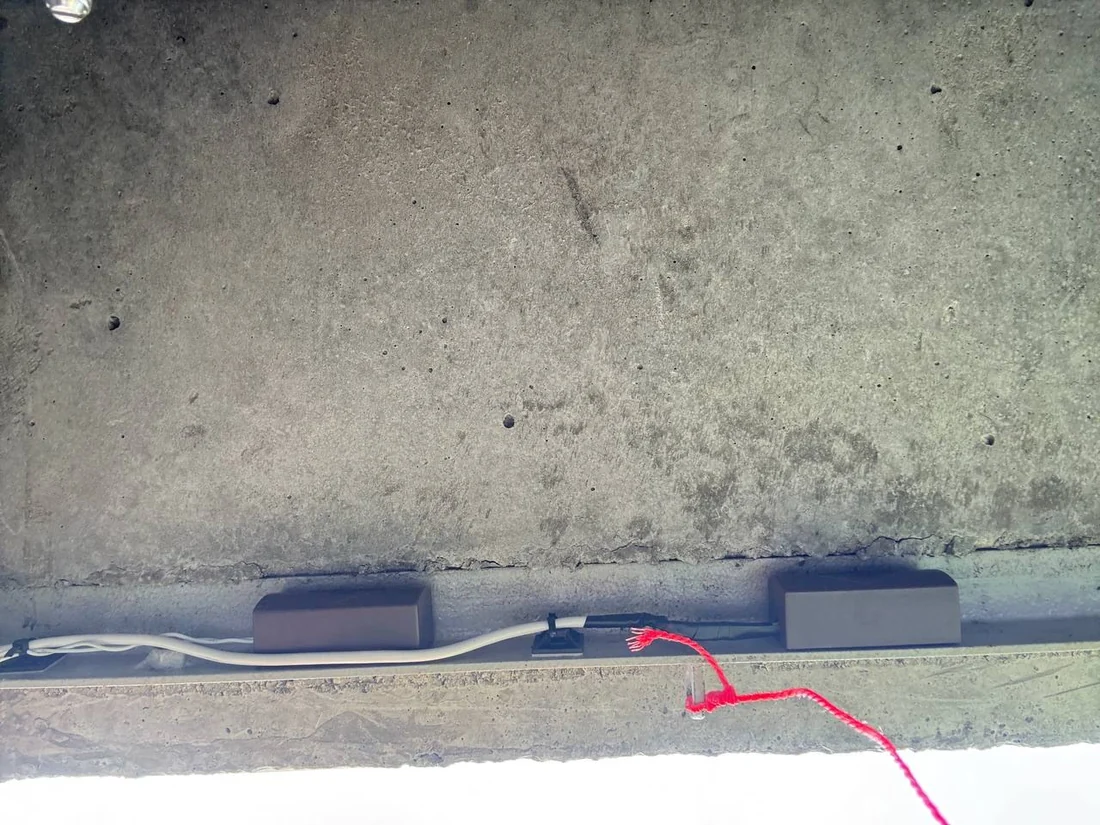
Live field demonstration- Two enclosure types: Metal and concrete installations.
- April–June 2026: Installation and reviewed field evidence.
- Three event dates: Testing and maintenance confirmed for two; weather suspected for the earlier event.
- Remote adjustment: Vibration sensitivity refined without a configuration visit.
Closed-box signal was lower than open-box signal but supported the reviewed operation. Battery readings stayed above the documented low-level reference during that period.
Engineering and reliability lessons
Tune for weather
Set sensitivity to balance useful detection with environmental vibration.
Adjust remotely
Field sensitivity was refined through remote configuration.
Keep the verification trail
An alert records disturbance; site feedback establishes its cause.
Check the closed enclosure
Open-door signal alone is not a reliable acceptance baseline.
Technical highlights
Review the documented configuration and its deployment limits.
View specifications and configuration notes
- Magnetic access-state detection and two vibration sensors in the demonstrated arrangement.
- Wireless mobile-network reporting and remote threshold adjustment.
- Replaceable 7.2 V / 4,100 mAh battery in the documented compact configuration.
- IP65 plastic enclosure specification and documented 0–60°C operating range.
- Battery, signal and event records in the monitoring dashboard.
The recorded observation period supports a battery-condition assessment for that period; it does not establish a guaranteed service life.
Deployment process
Survey & install
Review material, sensors and cable routing.
Register & baseline
Check battery and open/closed signal.
Controlled test
Verify access, vibration and alerts.
Tune & verify
Match sensitivity to real activity.
Report & scale
Agree severity and response contacts.
Discuss Your Monitoring Requirement
Tell us the enclosure type, roadside environment and events you need to detect. We can propose a practical pilot configuration.
Email AI-REKA